







¿Teñir o decolorar el cabello en casa?
Así es cómo obtener los mejores resultados con la reparación a nivel molecular.
There’s a real sense of pride that comes with knowing how to color your hair at home. The freedom to change things on your own terms! The quiet satisfaction of handling a quick root refresh without professional supervision! Still, DIY color carries a complicated reputation (we’ve all heard the cautionary tales of box dye gone wrong and hair that never quite recovers).
The most familiar aftermath is dryness or breakage. The more alarming outcome is textural: hair that takes on a straw-like look and feel, one that no gloss, serum, or styling trick can disguise. When hair reaches that point, the damage isn’t just cosmetic…it’s structural. The integrity of the hair has been compromised beneath the surface, where most products simply can’t reach.
To understand why this happens and how the K18PEPTIDE™ is able to penetrate to the innermost part of the hair, it helps to know how hair is built.
Each strand is made up of keratin proteins arranged in long chains, held together by bonds that give hair its strength, elasticity, and softness. The outer cuticle functions like armor, protecting those inner structures and helping hair retain moisture and shine.
Coloring and bleaching work by forcing the cuticle open so chemicals can penetrate the hair shaft. In permanent color, this allows dye molecules to deposit inside the cortex. In bleaching, it allows lighteners to break down natural pigment. Both processes are effective—but inherently aggressive. Along the way, they disrupt internal keratin chains and weaken the bonds that hold hair together.
Once those bonds break, hair stops behaving like…well, hair. It loses moisture more quickly, feels rough to the touch, and breaks under everyday stress—brushing, heat styling, even washing. And because the damage is internal, surface-level treatments can only go so far. They may temporarily smooth or soften the appearance of damage, but they can’t rebuild what’s been broken.
The solution isn’t avoiding at-home color altogether. It’s approaching it with the same intention as a professional service—one that includes proper preparation, recovery, and of course, molecular-level repair.
before you color: repair
Healthy hair processes color more predictably. When hair is already compromised going into a chemical service at home or in the salon, it’s more likely to absorb color unevenly, over-process, or feel brittle afterward. Simply put, damaged hair has more potential for error.
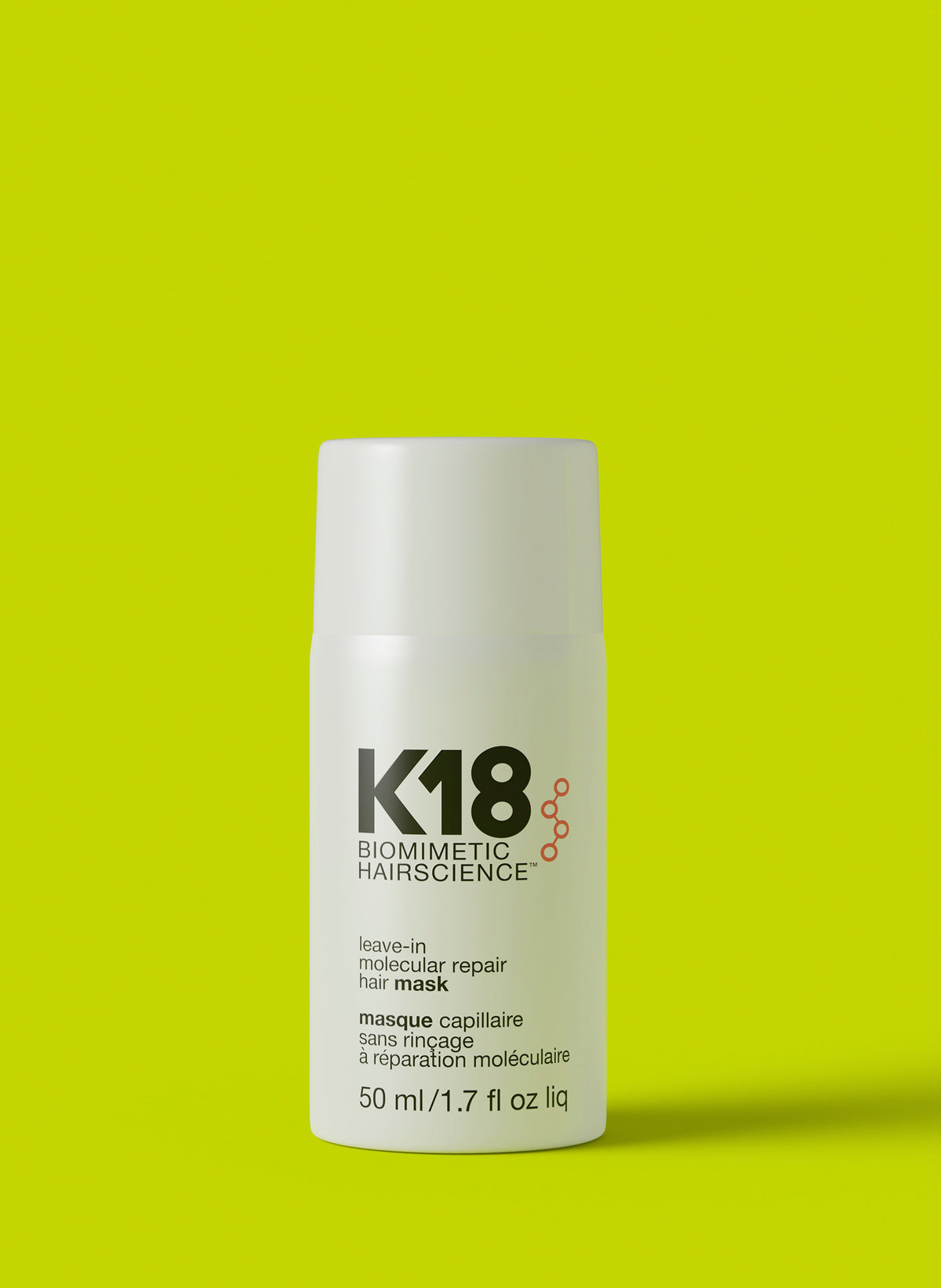
Incorporating K18’s leave-in molecular repair hair mask into your routine ahead of coloring helps change that. Powered by the patented K18PEPTIDE™, it works at a molecular level to reconnect broken disulfide bonds and polypeptide chains from pre-existing damage, restoring strength and elasticity before hair is exposed to chemicals again. The result is hair that goes into coloring smoother, stronger, and better equipped to withstand the process.
Ideally, repair begins several washes before coloring, but even a single pre-treatment can noticeably shift how hair responds during and after your at-home service.
How to prep hair before coloring:
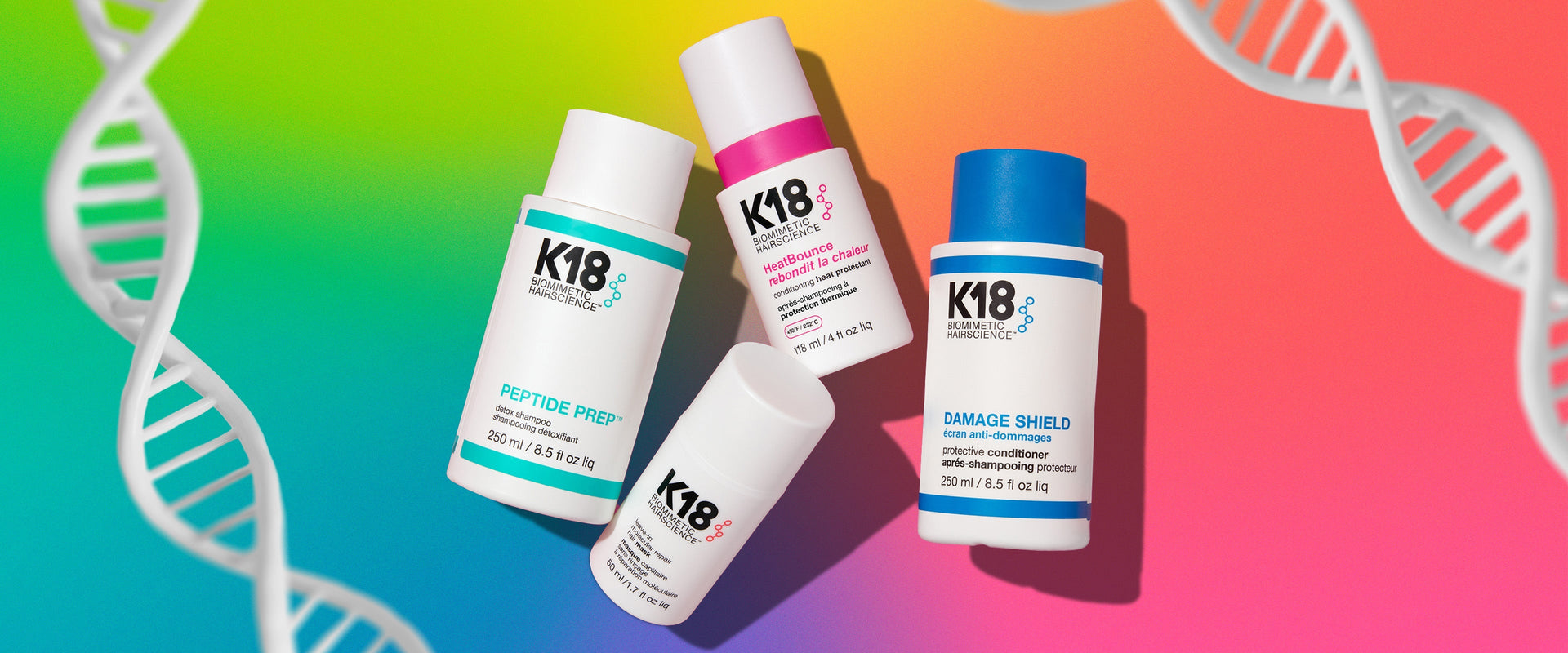
PEPTIDE PREP™ detox shampoo (skip conditioner)
Towel dry thoroughly
Apply K18 leave-in molecular repair hair mask
Wait 4 minutes
Style as usual
Color the next day
after coloring: damage control
Rinsing out color doesn’t mark the end of the chemical experience—it marks the beginning of hair’s most fragile phase. The cuticle has been disrupted, internal damage has occurred, and the hair shaft is more vulnerable than it appears. This is when breakage often sets in and texture can begin to change.
Traditional post-color care tends to prioritize softness and shine, relying on conditioners and masks that smooth the surface. While they may improve how hair feels temporarily, they don’t address the internal damage just caused by coloring and bleaching.
Molecular repair takes a different approach. Instead of coating hair, the K18PEPTIDE™ works beneath the cuticle, reconnecting broken disulfide bonds and polypeptide chains, reversing damage at hair’s innermost layers. With consistent use, hair gradually regains strength and elasticity—the qualities that determine how hair moves, feels and stretches, and how the results of your dye job hold up over time.
This repair window matters. Hair remains compromised for several washes after coloring, which is why repair shouldn’t be a one-time step. Use the leave-in molecular repair hair mask consistently for the first 4-6 washes after any service to stabilize hair structure and prevent damage from compounding over time. Then make sure to protect while you heatstyle with HeatBounce conditioning heat protectant for deeper heat protection than ever before*
Your post-color routine:
PEPTIDE PREP™ detox shampoo (skip conditioner)
Towel-dry thoroughly
Apply 1–3 pumps of K18 leave-in molecular repair mask, depending on hair length and thickness
Wait 4 minutes
Optional: follow with damage shield conditioner for extra slip + moisture
Style with HeatBounce conditioning heat protectant to protect, detangle + soften
Use consistently after coloring to help reverse damage and ensure hair stays soft, strong, and bouncy long after your transformation.
Healthy hair gives you the freedom to express yourself however and whenever you want. If that means a midnight run to the 24-hour drug store for black box dye because that is when inspiration strikes, so be it! We support you + we sleep peacefully knowing that molecular repair has your back through every color, every bathtub bleach session, every version of you.