

The science of the growth cycle and the surprising way it impacts your length.
The short answer: Your hair growth cycle determines how long your hair grows, but it can get interrupted by reactive oxygen species—highly reactive molecules that damage the hair follicle (where hair comes from). Worsened by oxidative stress, the normal hair growth cycle is disrupted. Hair follicles get pushed out of the active growth phase too early, so your hair spends less time growing and sheds faster. To get your hair growth cycle back on track, lower hair stress by strengthening + shielding your hair from daily damage.
Notice your hair hasn’t grown since your last selfie? You’re not alone in feeling frustrated about why your hair takes so long to grow, why it can’t grow past your shoulders, or why your ponytails are thinner than they used to be. Even after trying hair growth DIYs, from rosemary oil spritzes to castor oil massages, your hair may still shed or stop growing well before your goal.
It’s a call to look beyond the surface—because the lack of hair growth is not a cosmetic issue, it’s a biological one. Your body is talking to you in the way it knows how: sending increasingly desperate SOS signals in the form of hair shedding and thinning.
Understanding why hair starts shedding, thinning, or stops growing can get you one step closer to the solution. That’s why we tapped Dr. Rachael Williams, K18 Sr. Scientist and Scalp + Hair Follicle Biology Expert, to break it down for you.
-v1781192761034.jpg?3840x1751)
first: how does hair grow?
“Did you know that you have 100,000—150,000 hair follicles within the scalp? A hair follicle is a mini organ that makes the hair fiber. At the base, the bulb is made of different cells. There’s a group of cells called the dermal papilla that is the master orchestrator of the hair cycle and follicle size,” explains Dr. Williams.
the hair growth cycle stages
Your follicles cycle through an active growth phase, a regression phase, and a shedding phase. Even if your hair feels like one unit growing together, each hair follicle actually goes through hair growth cycles on its own—undergoing ten to thirty cycles in a lifetime! Plus, each hair growth cycle can take years to go from one part to the next. This can explain why some areas of your hair look different or grow longer than others.
-v1781192794650.jpg?3840x2000)
Let’s dive into what happens during each hair cycle phase.
anagen
According to Dr. Williams, “The hair follicle goes through an active growth phase, and this is where pigment is produced in the hair. How long the cycle is determines how long your hair will be, lasting approximately 2-8 years.”
Fun fact: That’s why your eyebrow hairs aren’t as long as your scalp hair, staying in anagen for only 2-3 months.
Now the tough news. The anagen phase gets shorter as you age, so your hair gets weaker and thinner over time. It can also stop earlier than expected, so the hair fiber sheds and ends up in your brush or bathroom floor. That brings us to the next phase…
catagen
“This is where the fiber detaches from the dermal papilla and the blood supply, and is held loosely within the scalp. It lasts approximately 3 weeks,” explains Dr. Williams. The newly formed hair shaft makes its way up towards the hair follicle bulge. But if it can’t reach the bulge, the hair cycle ends, and you lose that hair.
telogen
Dr. Williams sheds light on “telogen, which is a maintenance phase. Within this phase, the anchoring proteins, which are holding the fiber in place, start to get broken down.” New hair is developing at the base of the hair follicle, pushing this hair shaft up to the surface. The telogen resting phase lasts about 2-3 months.
exogen
This is the last, and shortest cycle, overlapping with the next anagen phase. Dr. Williams shares that “once the proteins are broken down, the hair sheds. It’s making way for the already forming hair fiber below in the next hair cycle.”
People typically shed about 100-150 hairs a day. It may seem like a lot, but most have about 100,000 scalp hairs at any time: so don’t fret if you see some hair fall in your shower.
why does your hair stop growing?
Here’s where the culprit comes in: premature hair aging from reactive oxygen species (ROS). These are highly reactive molecules that interact with surrounding lipids and proteins in your hair + scalp, causing a whole lot of damage. They’re a natural byproduct of cellular processes, but too much can throw a wrench in the hair growth cycle.
Your lifestyle choices can speed up the chaos and cause oxidative stress. Think: poor diet, smoking, and lack of sleep. Even things out of your control, like emotional stress and hormonal changes! Oxidative stress causes inflammation and collagen breakdown that messes with your hair follicles. Dr. Williams emphasizes that, “this oxidative stress overpowers your scalp + hair follicles’ natural antioxidant defenses,” so they can’t work properly.
This is when the hair growth cycle goes off the rails. Your hair follicles get pushed out of their active growth phase too early and into catagen (the regression phase) and then telogen (the resting phase). So your hair spends less time growing, and sheds faster than you expect. That’s why you may find more hair falling off in your brush.
-v1781192838840.jpg?3840x2000)
how to speed up hair growth
For the longest, strongest hair, you need to treat the follicle well and prevent premature biological aging. Just like a plant, the roots are where the real growing starts. Fertilizing will keep the roots in optimal condition for growth. This can look like minimizing oxidation that invites damaging ROS (reactive oxygen species) in. Preventing oxidation takes work, but the effort you put in now will pay off with better blooms later.
long, healthy hair routine
Start with a clean scalp using K18 peptide prep™ detox shampoo to remove 99% product buildup*.
Why? Residue left on your hair + scalp from haircare products can act as a sticky trap for pollution and heavy metals, which can then oxidize into ROS.
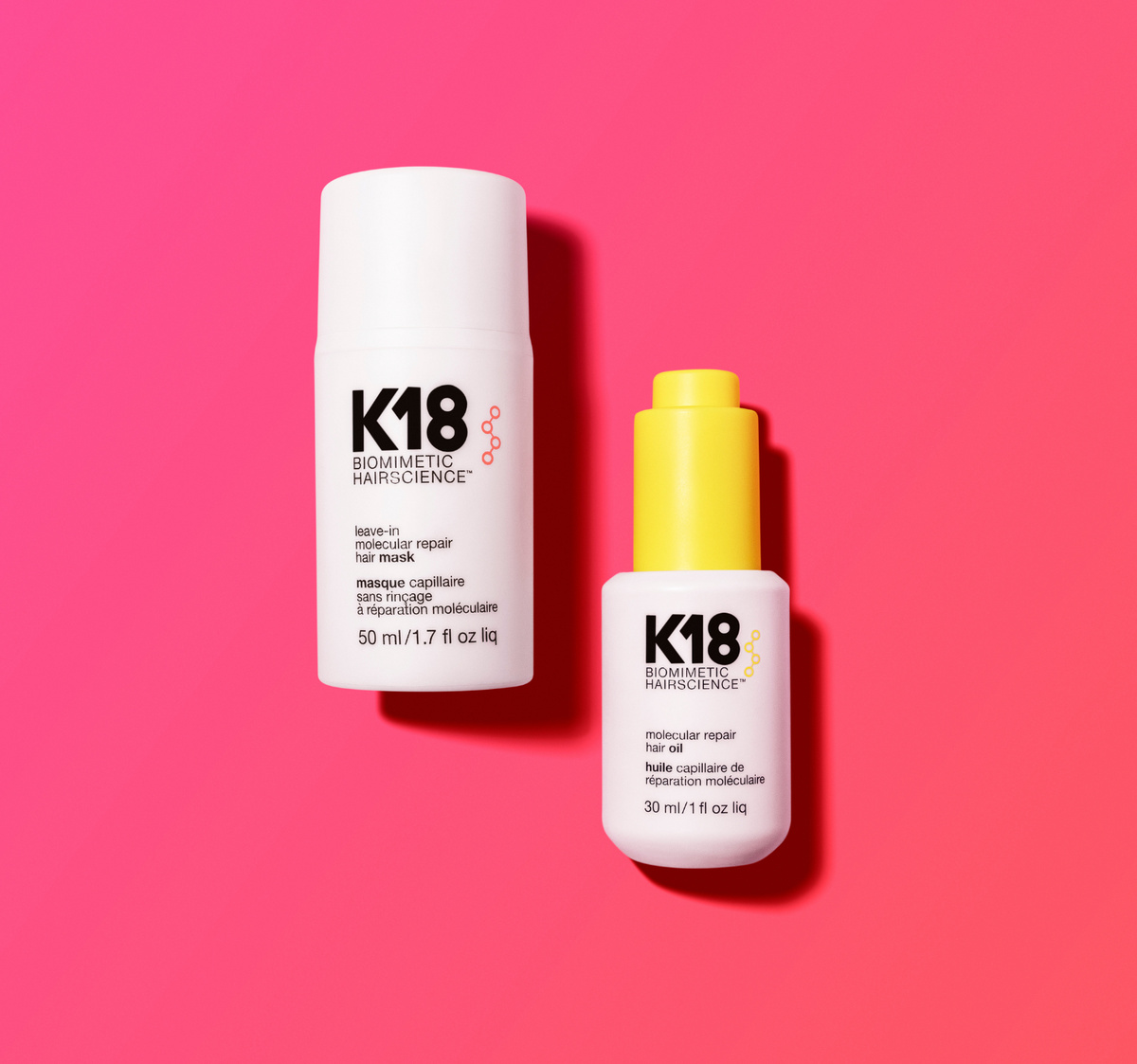
Apply K18 leave-in molecular repair hair mask once a week to reverse damage in 4 minutes*.
Why? Repair existing damage for stronger strands that can better withstand future damage.
For all other washes, use K18 damage shield protective conditioner to protect hair against damage from UV rays, mechanical styling, and environmental aggressors for up to 3 days*.
Why? It’s all in the name: shielding hair from damage will prevent ROS from coming in the first place.
*k18hair.com/disclaimers
 Anterior

.png?v=1706135901220&transform=resize=150x150)