





is your hair growing less or shedding more?
Why your scalp + follicles matter more than you think.
When it comes to healthy hair, most of us fixate on what we can see: shine, softness, breakage, frizz, and so on. But the real key to healthy hair lies beneath the strands with (you guessed it) your scalp. Why is this, though?
The short answer: If your hair has stopped growing or started shedding, these changes are likely not random. They are a result of issues in your scalp barrier, the protective outermost layer of skin that protects follicles, locks in moisture, and shields your sensitive scalp from the environment.
Just think about it: Your scalp is home to your hair follicles, which are responsible for producing every single strand of hair on your head. So of course the health of your scalp is going to have a direct affect on how your hair grows. When you have a healthy scalp, it helps support optimal follicle function. But when it’s out of whack, it can take a toll on the quality, strength, and overall appearance of your hair.
There’s a lot to cover, but we’re here to break down everything you need to know on the topic, with insight from K18’s Senior Scientist, Dr. Rachael Williams. Let’s get into it.

what are hair follicles?
In short, follicles are tiny living mini-organs responsible for creating every hair fiber on your head.
"A hair follicle is a mini-organ that makes the hair fiber, and there are different components,” explains Williams. “A lot of this is happening right at the root."
Each follicle contains a highly intricate network of cells, including stem cells, pigment-producing melanocytes, matrix cells, and the dermal papilla (aka the signaling center that helps regulate the hair growth cycle). Together, these cells help determine everything from growth rate and thickness, to pigment production.
ok, what happens when they’re stressed?
Think of the follicle as the factory, the scalp as the environment surrounding it, and the hair fiber as the final product. When the micro-environment around the follicle becomes stressed or disrupted, the quality of what's being produced takes a hit.

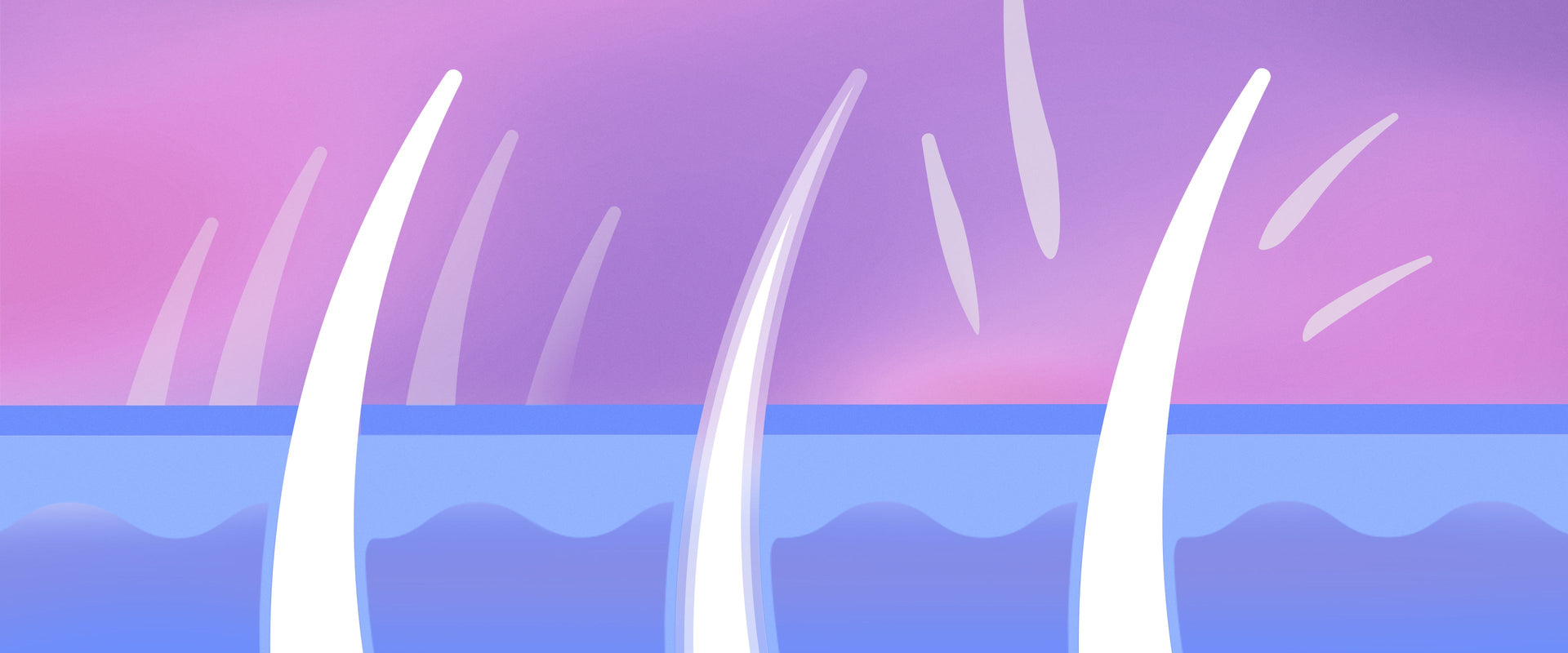
These all cause oxidative stress. With or frequent or chronic exposure to these stressors, follicles can be pushed to shift out of their active growth phase (anagen) earlier than they should and move into the regression (catagen) then shedding (telogen) phase. The result? Hair may become thinner, shed more noticeably, grow more slowly, or lose pigment earlier.
It’s worth noting the effects aren’t always immediate. Follicle stress often shows up gradually as reduced density, increased shedding, or premature graying. So if you’ve noticed a sudden influx of grays, take this as a signal that your body is trying to send you, not a reason to promptly start panicking.
understanding the different layers of your scalp
Now that you’ve got a good grasp on the importance of follicles, let’s discuss the scalp. For starters: Your scalp is skin, but it's not exactly like the skin on the rest of your body. It contains a much higher concentration of hair follicles, sebaceous (oil) glands, blood vessels, and nerve endings, all of which work together to support hair growth.
The outermost part of the scalp is the stratum corneum, the uppermost layer of the epidermis. Together with the underlying epidermal layers, it forms the scalp's protective barrier, helping to retain moisture while defending against environmental aggressors. Beneath the epidermis lies the dermis, where hair follicles are embedded and supported by a rich network of blood vessels that deliver nutrients and oxygen.
The living layers of the epidermis are constantly renewing the scalp surface and play an important role in immune defence and maintaining barrier function. The dermis provides the structural foundation for the scalp and houses the blood vessels, nerves and connective tissue that help support healthy follicle function.
A healthy scalp barrier acts as the first line of defense against premature hair changes such as thinning and graying. When it's functioning properly, it helps guard against oxidative stress, sustain hydration, regulate the scalp environment, and reduce the impact of external stressors that throw off follicle health.
why scalp damage + oxidative stress matter
Not every scalp issue looks the same.
For instance, dandruff is often linked to an imbalance in the scalp microbiome and increased skin cell turnover. And an irritated, itchy scalp may be more closely tied to barrier disruption, inflammation, or environmental stress. While these concerns can feel different, they often share a common threat: a compromised scalp environment.
One of the biggest culprits is oxidative stress created by reactive oxidative species (ROS), and biological damage is caused when these free radicals overwhelm the body's immune system. UV exposure, pollution, and other environmental stressors create ROS and oxidative stress within the scalp, which affects both the scalp and the follicles beneath it.
Over time, oxidative stress can accumulate and our bodies' defenses can become less resilient to it and this can create an environment that's less supportive to the follicle. Basically, a healthy scalp isn't just about comfort. It's about creating the right conditions for follicles to perform their best.
why strands suffer when your scalp barrier isn’t thriving
Many of the characteristics we associate with healthy hair (see: shine, length, thickness, etc.) are actually determined before the fiber even emerges from the scalp.
Follicle health helps determine the characteristics of the hair we produce, from its thickness and growth rate to its shape and colour. As oxidative stress accumulates with age, the biological systems that support follicle function can become progressively less efficient. This can shorten growth phases, disrupt pigment production and alter fiber formation, leading to hair that appears thinner, less dense, more prone to shedding and greying, and less resilient to everyday stressors.
"Your hair follicle is what makes the hair fiber and it's a complex system,” says Dr. Williams. “That complexity is why scalp and follicle health have such a significant impact on overall hair performance, from softness and shine to strength and density.”
scalp aging vs. scalp health
Scalp health and scalp aging are related, but ultimately not the same thing. Scalp health, for instance, refers to the current condition of your scalp. Factors like excess oil, dryness, flakiness, irritation, and product buildup can all influence how healthy your scalp feels and functions today.
Scalp aging, on the other hand, reflects the cumulative biological changes that naturally occur over time. These changes can include increased oxidative stress and can cause shifts in collagen structure, reduced vascular support, changes in barrier function, and inflammation. Together, these changes can similarly influence the micro environment surrounding the follicle and ultimately impact hair growth and quality.
It’s important to add that scalp aging isn't determined by age alone. Environmental stressors like UV exposure and pollution can accelerate the aging process by increasing oxidative stress.
That's why the conversation around scalp care is evolving beyond just managing flakes, oil, or buildup. The spotlight is now on supporting scalp longevity so hair can look and feel its best through every season of your life.
Because healthy hair doesn't start with the strands you see. It starts with the living ecosystem beneath it: a whole network working together to help your hair grow, age, and thrive.