








We C You 02: Cómo hablar sobre el cabello rizado y ensortijado
Escucha, en K18 nos preocupamos mucho por la expresión, por si no lo sabías, y sabemos que la expresión se manifiesta de muchas formas. Cómo llevas el pelo, cómo hablas, las canciones que te gusta cantar en la ducha. Así que hoy vamos a hablar del lenguaje en torno al cabello y de cómo las palabras adecuadas pueden conducir a una expresión más empoderadora. Lo creas o no, algunos de los términos que has estado usando para describir el cabello rizado pueden estar anticuados o incluso ser ofensivos.
¡Pero no te estreses! Contamos con nuestra experta en cabello rizado y educadora profesional de K18, Alifia, para profundizar en el tema de hablar del cabello.
Words run deep. Not just in what you say but how you say it. Whether you’re talking about your own hair or complimenting someone else’s, the right word choice can mean speaking and instilling confidence, love, and acceptance.
When we use certain words or labels without intention, knowledge, or empathy, they can sting.
As someone who has curly–coily hair, I know that sometimes these words can stick with a person through their whole life! Little girls and boys that didn’t like their curly hair because it was called wild and unruly, grow up to be women and men that endure their hair being labeled unkempt and unprofessional. They live their whole lives believing something is wrong with their hair.
As a professional, it has been my personal intention to speak pride into curly–coily hair whenever possible with the language I use when educating and speaking to different hair types.
All hair is beautiful and deserves to be appreciated and celebrated however we choose to rock it. Below you’ll find a guide of some words with a negative connotation or complex history around them along with some words that are empowering alternatives when you’re looking for the right thing to say.
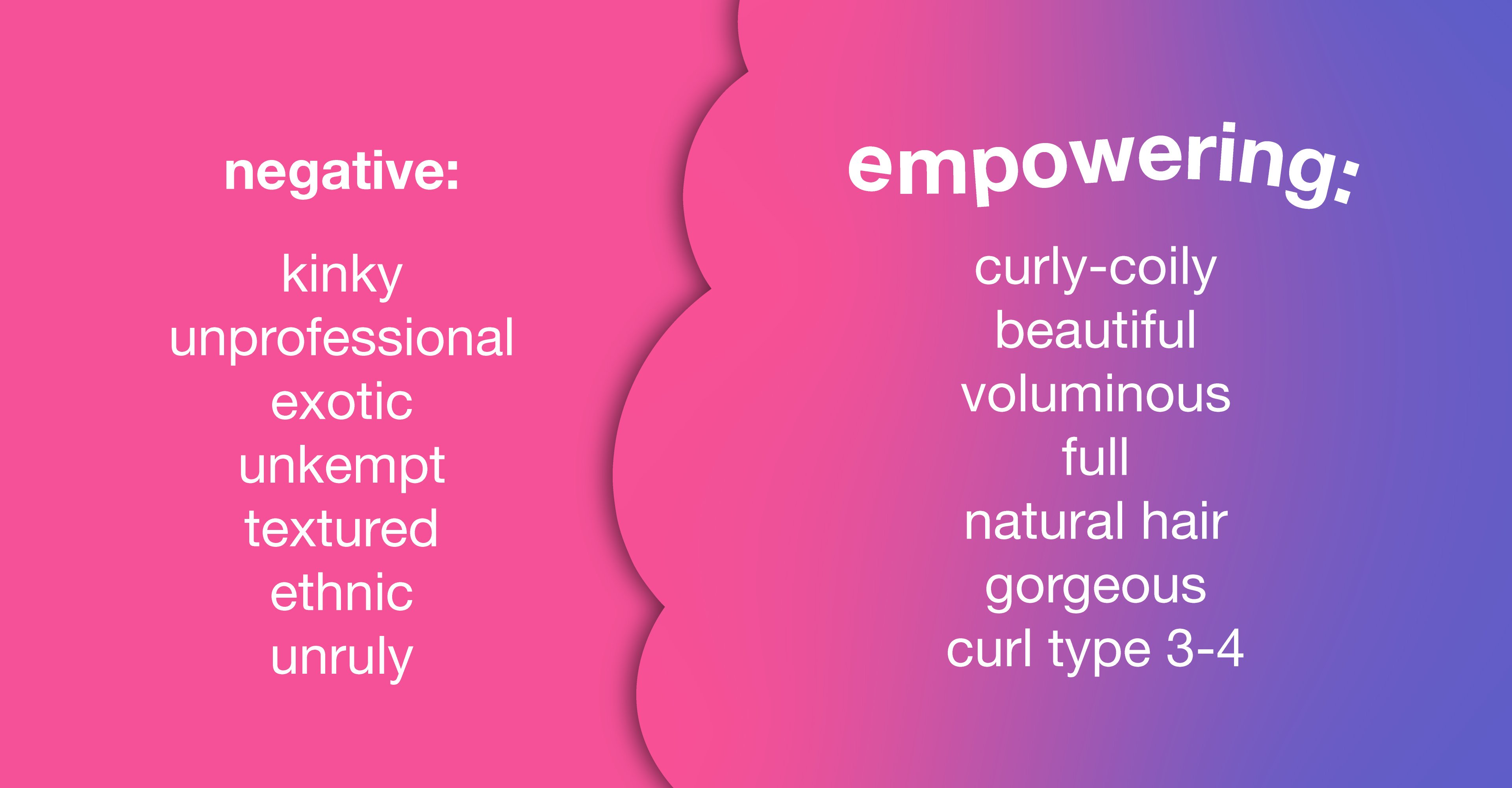
You may not have realized the harmful intent behind these negative words, but historical context has a lot to do with it. For example, the word kinky refers to having knots or twists—but it was commonly used in the early 1800s with the derogatory term “nappy” to describe African hair as unusual, unconventional, and separate from the norm. See how context changes things?
With something as simple as words, we can choose to elevate, honor, and celebrate all hair types, just the way they are.
Check back for more curly-coily chats, we’re going all the way.
x Alifia, Curly-Coily Expert + K18 Educator