







why is your hair aging faster than you?
The culprit may be oxidative stress.
For decades, the beauty industry's conversation around aging has centered on the face. We've become fluent in the language of collagen loss, fine lines, wrinkles, and UV damage. But while we've been busy protecting our skin barrier and investing in longevity-focused skincare, another aging process has been quietly unfolding just a few inches north.
The scalp.
More shedding. Less density. Strands that feel finer than they once did. Gray hairs appearing earlier than expected. These changes are often dismissed as an inevitable part of getting older, but scientists are increasingly looking at them through a different lens—not as cosmetic concerns, but as signs of biological aging within the scalp itself. And the numbers attached to it don’t always match our birth certificates.
"Premature aging is a biological process," says Dr. Rachael Williams, senior scientist at K18 and an expert in scalp and hair follicle biology. "It has different biomarkers for things like oxidative stress, hair follicle miniaturization, and hair graying.”
In other words, hair aging isn't simply about what you can see. It's about what's happening within the scalp and follicle environment that produces hair in the first place, and one of its biggest drivers is oxidative stress.
What is oxidative stress?
You may have heard the term oxidative stress in conversations about skin aging already. The same science applies to the scalp.
Every day natural biological processes and the effects of the environment lead to the production of a class of molecules within the body called reactive oxygen species (ROS), also known as free radicals. ROS production is a normal part of cellular function, but problems can arise when they accumulate faster than the body can neutralize them.
The result is oxidative stress, a process that can gradually disrupt the systems responsible for healthy hair growth, pigment production, and scalp resilience.
"The accumulation of oxidative stress happens due to hormonal shifts and environmental effects, and then you’ve got factors like lifestyle also affecting it," says Dr. Williams.
Its sources are familiar: UV exposure, pollution, psychological stress, hormonal changes, the things we eat and drink, and how much we do, or don't, sleep. Over time, that cumulative burden can begin to affect how the scalp functions.
Of them all, UV exposure is the most relentless – triggering the formation of additional free radicals within the follicle environment and a surge in oxidative stress, even when the rest of your lifestyle is in balance.

aging is not just about gray hair
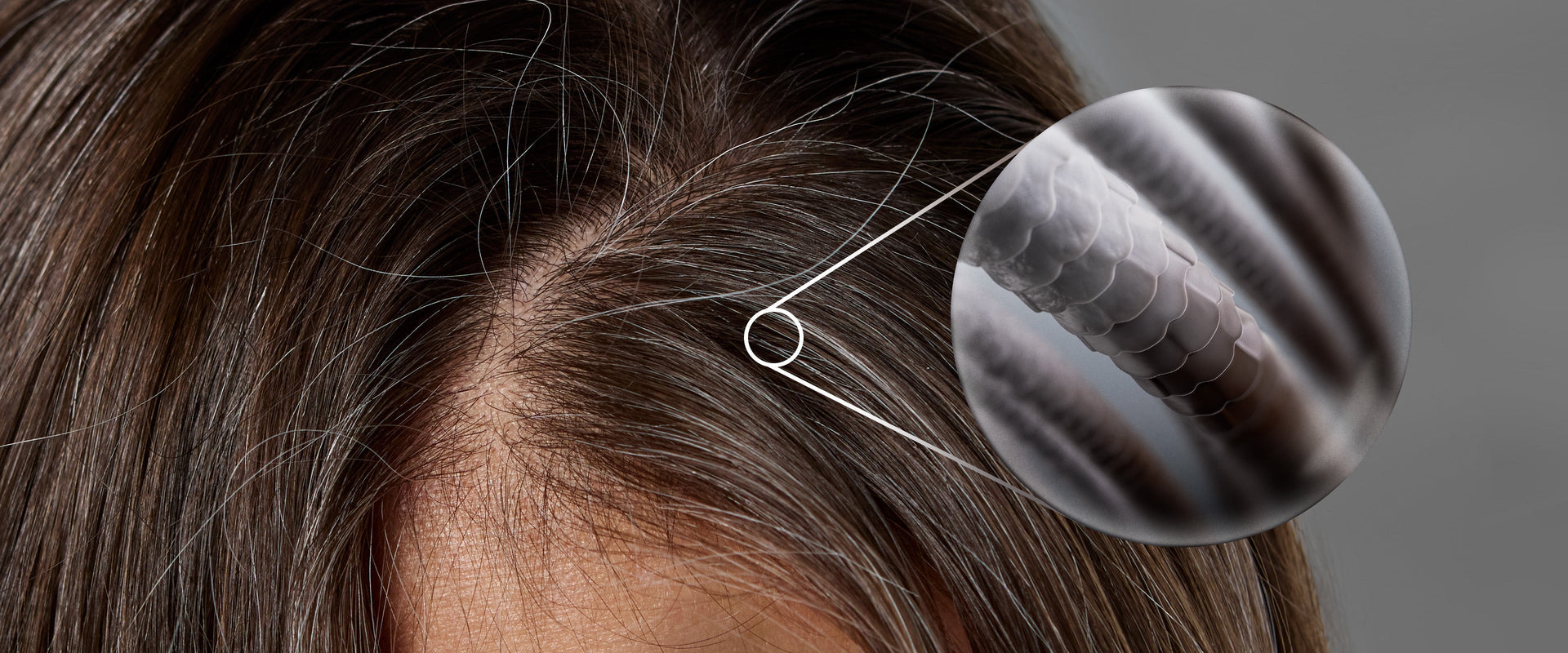
Gray hair tends to get all the attention, but in reality, it's only one symptom of a much larger biological process. Oxidative stress affects multiple systems within the scalp simultaneously, which is why – when you start to look closely – premature hair aging often appears as interconnected consequences rather than a standalone one.
Graying occurs because our follicles contain melanocytes, specialized cells responsible for producing melanin, the pigment that gives hair its color. These cells are particularly vulnerable to oxidative damage, and as oxidative stress accumulates, pigment production can slow, leading to the gradual appearance of gray hair.
At the same time, oxidative stress can also influence the signaling pathways that regulate the hair-growth cycle itself, creating a domino-like effect.
"In this process, the color-producing melanocytes are depleting and slowing down. The follicle's growth cycle is also shortened, because your antioxidant defenses are becoming overwhelmed by the amount of oxidative stress," says Dr. Williams. "The follicle's natural defenses are weakened, and the anchoring within the hair follicle fiber is weakening, leading to graying and shedding."
why hair longevity starts at the scalp
As scientists continue to better understand the relationship between oxidative stress, follicle health, pigment production, and scalp resilience, the conversation around hair aging is beginning to shift.
"Until now, a lot of the problems that you see with premature aging have been treated cosmetically," says Dr. Williams. "The industry has been providing solutions like it's a cosmetic problem, but it's not."
It's a simple observation, but one that's reshaping the way scientists think about hair aging. If the process begins beneath the surface, then longevity isn't just about preserving the appearance of hair, it's about supporting the systems that help keep it healthy in the first place.
As always, K18 is at the forefront of this development. In the coming weeks, we'll explore the research and innovations changing the way we’re thinking about premature hair aging, and we’ll be doing so from the scalp out.